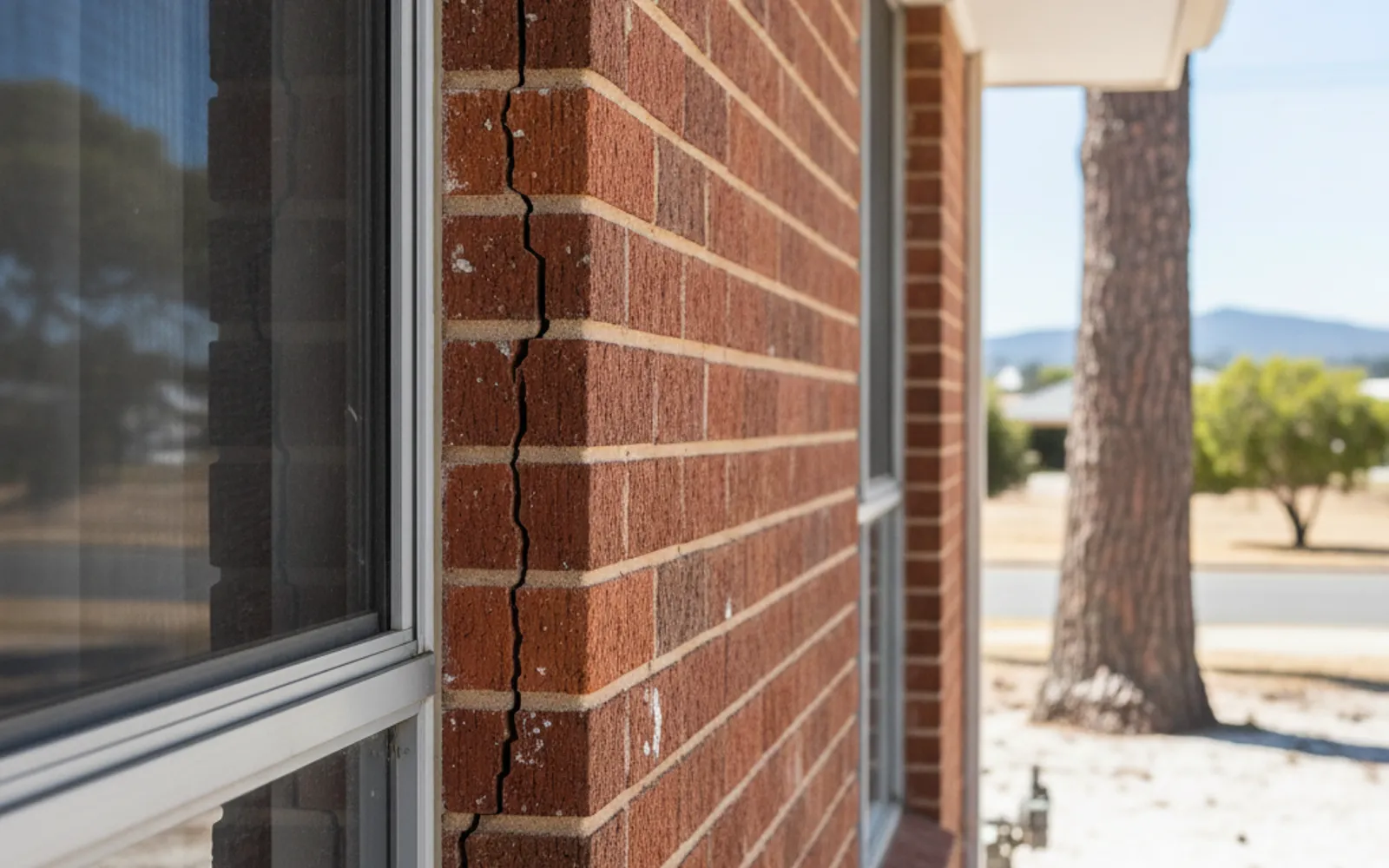
An independent structural engineer looks at the cracks, the floors and the roof, works out the likely cause and grades the damage in a written report. Call (08) 5550 6237 and we'll pass your details to the engineer who quotes the job.
A structural inspection in Perth usually starts with something you've noticed: a crack running up from a window corner, a door that suddenly sticks, a floor with a new slope or a ceiling that's started to sag. An independent structural engineer inspects the house, works out what is most likely moving and why, and writes it up. The report gives you the cause, the severity measured against the CSIRO damage categories, and the engineer's recommendations.
Kings Park Structural Co is an advertising and referral service, not an engineering firm. We pass your enquiry to an independent structural engineering firm that pays to advertise here, and that firm quotes you and contracts with you directly. Engineers quote each job, and the price depends on the house, the problem and what the report is for. Our page on structural engineer costs in Perth sets out what is and isn't published.
The engineer looks for what's driving the movement: a leaking pipe, a soakwell too close to the footings, tree roots, reactive clay or a rusting lintel. Patch a crack without knowing the cause and it tends to come back.
Crack widths are measured and placed in the CSIRO damage categories 0 to 4, which reproduce AS 2870. That gives you, your insurer or your builder a shared yardstick instead of 'it looks bad'.
Typical scope covers walls, roof structure, load-bearing floors and ceilings, and the slab and footings, looking for cracking, sagging or shifting. It's a visual assessment of the areas the engineer can get to.
The report sets out what the engineer thinks should happen next, which might be monitoring, fixing a water source, or design for repair work. Engineers assess and design; any building work is for a registered builder.
An engineer's report is something you can give to an insurer, to a builder you're in dispute with, or to your own advisers when buying. Tell the engineer what it's for, because that shapes what the report needs to answer.
Plenty of Perth 'structural inspections' are AS 4349.1 pre-purchase reports written by building inspectors. This page is about a report from a structural engineer, so ask which one you're paying for.
An engineer's inspection is aimed at the parts of the house that hold it up, not the paint and the tapware. Scope varies with the problem and the house, but a crack or structural report typically looks at:
It's a visual assessment of accessible areas, so if the engineer thinks something needs a closer look, such as a plumbing leak check, the report says so. Living in double brick and also thinking about opening up a wall? Mention it, because that's a separate question covered under wall removal engineering.
Most of the Perth metro area sits on sand, which is normally AS 2870 Class A and moves very little with moisture. The catch is water. CSIRO notes that sandy soil is particularly easy to wash away, so a leaking pipe, a downpipe dumping roof water beside the footings, or an over-keen reticulation system can erode the ground under a wall. The City of Joondalup, for one, requires a soakwell to sit at least the width of the soakwell away from buildings so the hole doesn't undermine footings.
The eastern side is a different animal. The Guildford Formation clay outcrops over much of the eastern Perth region, and clay sites turn up particularly in the Perth Hills. Reactive clay swells when wet and shrinks when dry, which is when doors start binding and cornices crack, and tree roots can dry it out or lift footings outright. There's more on that area under Perth Hills and eastern suburbs.
Near the coast, steel lintels over windows and doors can rust, and rust takes up more room than the steel it replaces. The result is cracking in the brickwork and mortar around the lintel, often a telltale line above an opening. Owners in the western suburbs and Fremantle know this one well.
Engineers commonly grade crack damage using the CSIRO categories, which reproduce AS 2870-2011 Table C1. Width is the main measure, though the number of cracks counts too:
CSIRO also warns that symptoms don't simply reflect the original cause, so a category on its own isn't a diagnosis. The engineer's job is to put the width, the pattern, the soil and the water together. A crack that's still growing is a different story from one that opened years ago and stopped, which is why the engineer may suggest monitoring before anything else.
Owners usually come to this for one of four reasons: peace of mind about a crack, an insurance claim, a dispute with a builder, or a house they're about to buy. The honest first step is finding out whether you need an engineer at all. Send photos of the cracks, a couple of wide shots of the wall and anything you know about leaks or recent work, and the engineer can say whether a site visit is warranted and quote it.
If a report points to the footings, bear in mind that underpinning or replacing footings isn't exempt from a building permit in WA, so it goes through the permit process with a registered builder. On the engineering side, registration of structural engineers in WA began on 1 July 2024 with a transition period to 1 July 2027. From that date structural engineering work must be done by a registered building engineer, and you can check anyone's registration on the DEMIRS Building Engineer Register. Planning an extension rather than chasing a crack? See extension engineering.
Width is only part of it, but the CSIRO categories give a yardstick: under 0.1 mm is category 0, under 1 mm category 1, under 5 mm category 2, and 5 to 15 mm, or several cracks of 3 mm or more together, category 3. CSIRO says monitoring should always be treated seriously, and a crack that keeps widening matters more than one that has stopped. Only an engineer who has seen the house can tell you what yours means.
None of the Perth engineering firms we checked publish a fixed fee for a crack or structural report; they quote per job. The cheapest advertised figures are usually for building inspection reports, such as one Perth firm's AS 4349.1 reports from $440 incl. GST, and those are prepared by building inspectors, not engineers. As a national comparison only, Bark's 2026 figure is $560 ex GST per residential inspection and report across Australia, with no Perth figure given. More on our Perth cost page.
No. A pre-purchase report under AS 4349.1 is usually done by a building inspector, and at least one Perth inspection firm states plainly that it doesn't provide structural engineering or engineering certification. If a building report flags cracking or movement, that's usually the moment to get an engineer to look at the cause. Ask whoever you book who will actually sign the report.
That depends on your policy, and nobody can promise you an outcome. Many home policies exclude gradual subsidence and ground movement, and one large WA insurer's 2021 policy wording also excluded gradual leakage over time where the owner should have known about the leak. Check your own policy's exclusions; a report on the cause is usually what an insurer will want to see.
Building and Energy (DEMIRS) handles building disputes in WA. A building service complaint can generally be made up to 6 years after the work was completed, and a home building work contract complaint (contracts of $7,500 to $500,000) generally within 3 years. You must serve a Notice of Proposed Complaint on the other party at least 14 days before lodging, and an independent engineer's report is often the evidence a complaint rests on.
Tell us what you need looked at and get a written quote.